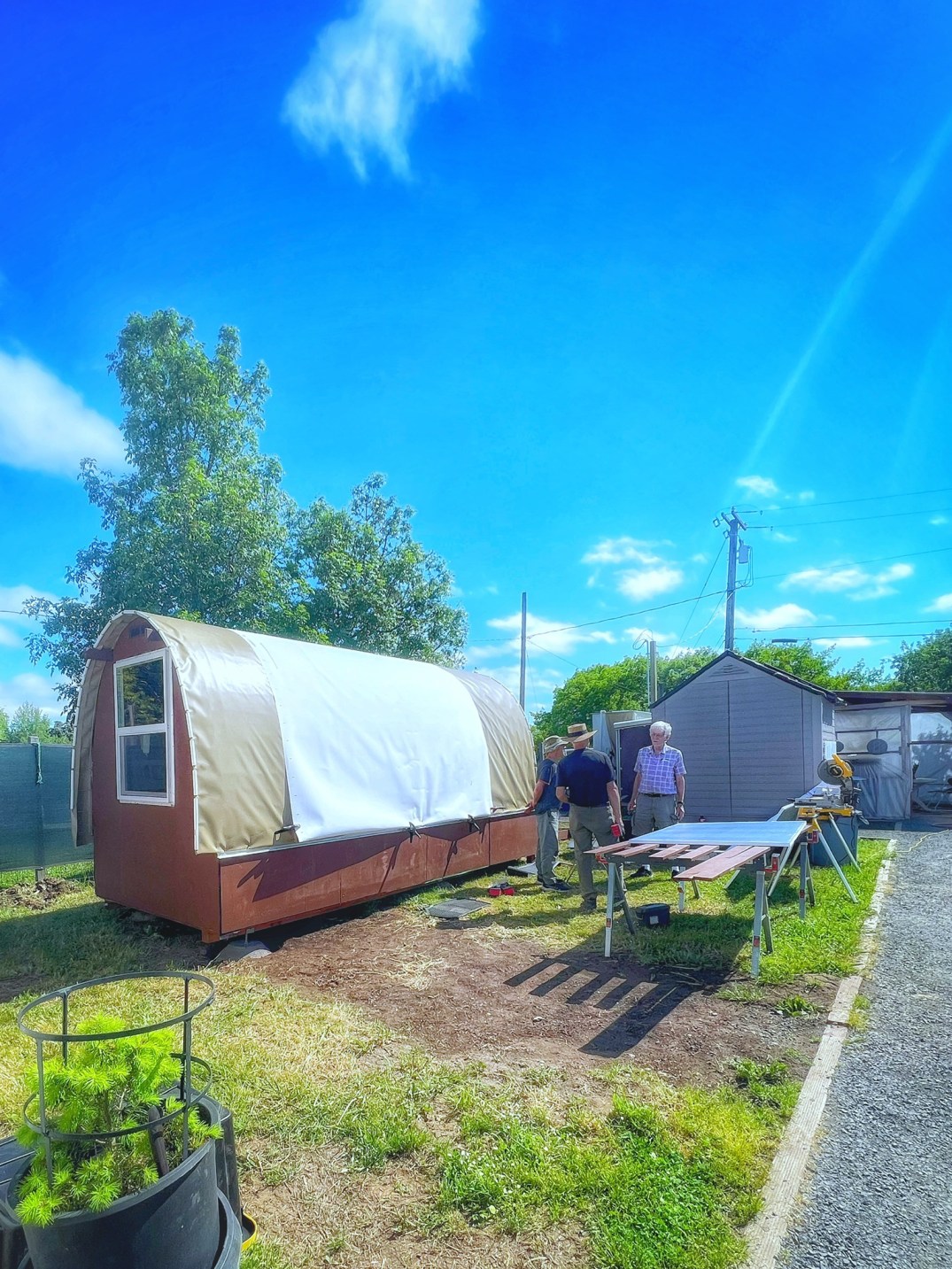
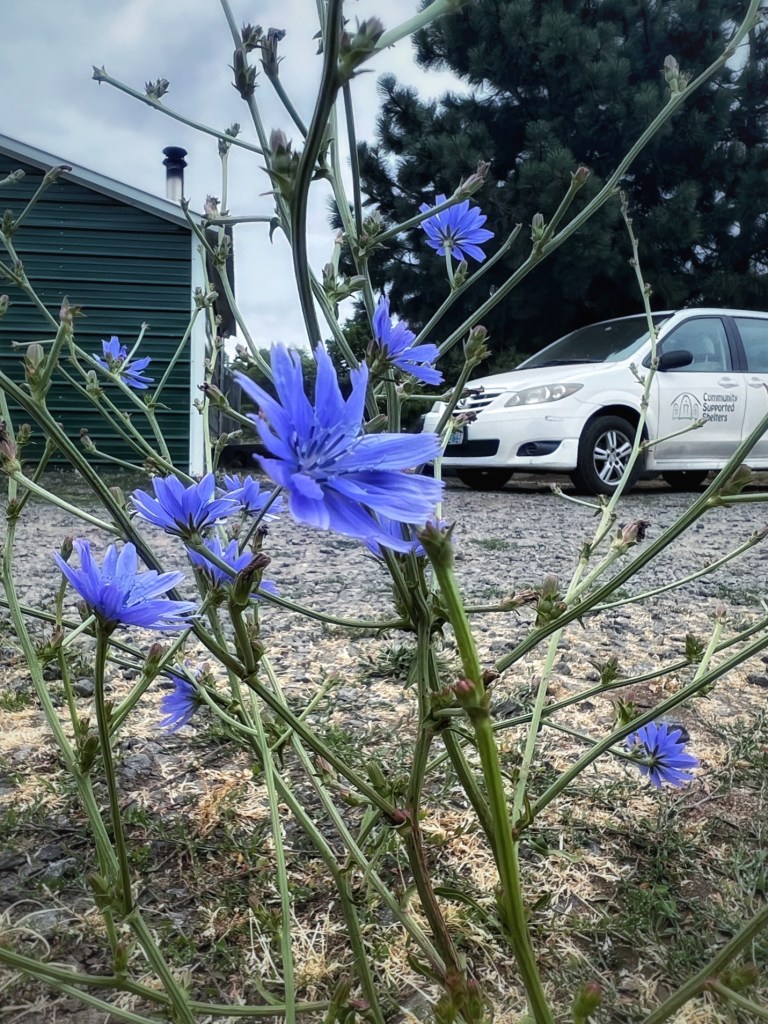
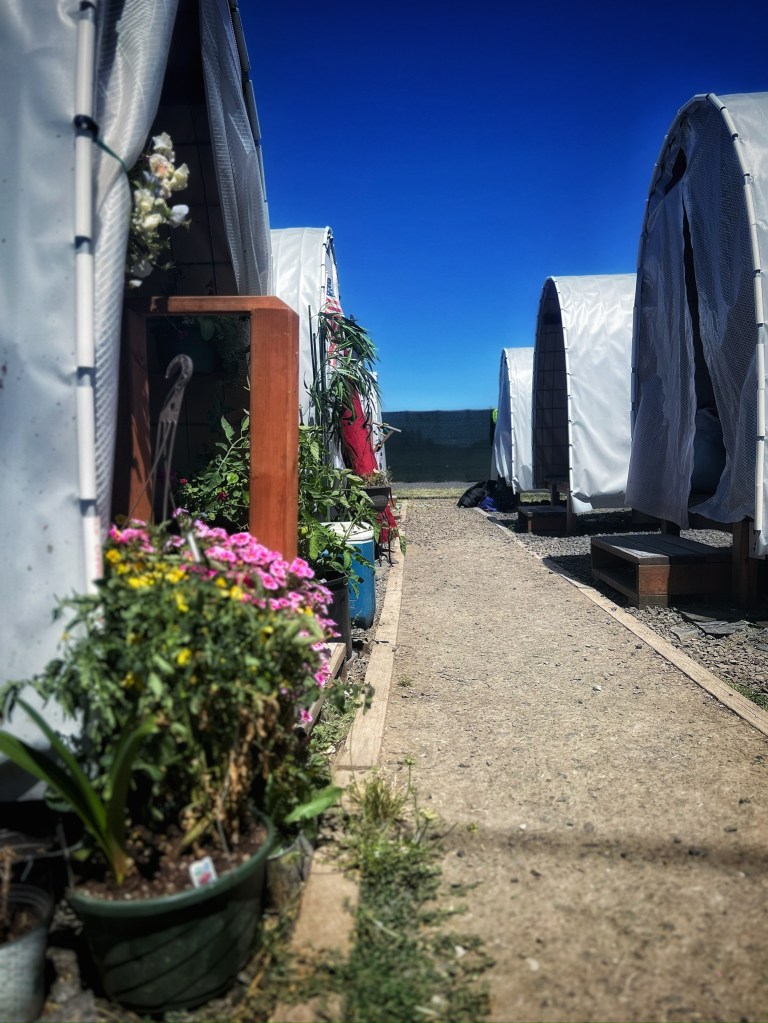
The origin of this local nonprofit is a steeped in the grassroots of the Occupy Movement in Eugene, Oregon. Now over a decade later, Community Supported Shelters has grown to operate 14 separate sites; the mission of this non-profit simple – to build intentional communities for the unhoused. Their iconic Conestoga Huts are named after heavy covered wagons that were used in the 18th and 19th centuries.
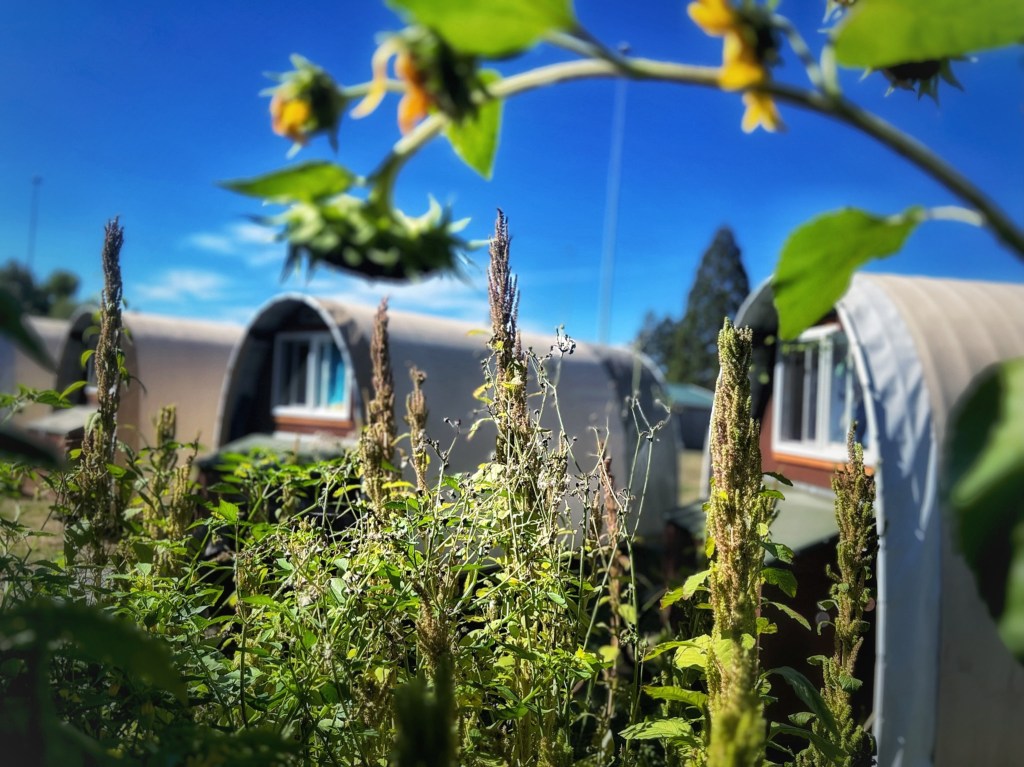
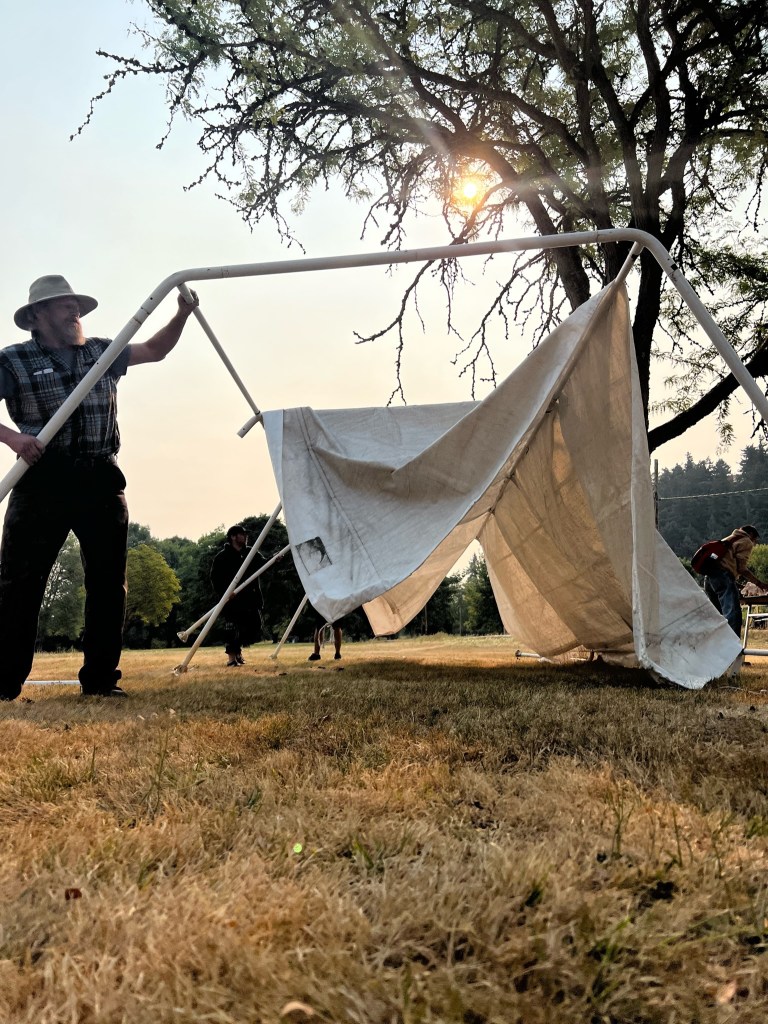
Conestoga Huts are more affordable and easier to assemble and maintain than other individual shelters and tiny homes as evidenced by the CSS hut manuals shipped around the world to those aspiring to build their own alternative shelter. These resilient structures emphasize keeping unhoused people reasonably sheltered from the weather with the basic security of privacy and locking door.
Safe Spot Communities
CSS Communities are classified as ‘Safe Spots’ and find their literal identities in a highly specific City of Eugene code. Here Conestoga Huts are defined as ‘vehicles,’ this cementing CSS’s humble beginnings as a car camping program . . . a less than glorious start for a pioneer of alternative shelter but one we’ve used to our advantage over the years. Eugene is infamous for creative solutions to the homelessness crisis in the State of Oregon. CSS was the first of many such alternative solutions aimed at solving the struggle for shelter in a community with very limited resources for the growing unhoused.


CSS Communities vary in size from just a few huts placed on public or private land to the CSS-operated sites of up to 20 huts or more, primarily built on park land otherwise unneeded by the city. Micro-communities (less than 6 huts) on church properties were some of the first sites to successfully host CSS. The Eugene Mission followed suite and to this day hosts two separate CSS Safe Spot Communities on their 7.5 acre campus on 1st street – one for Veterans and one sober-site.

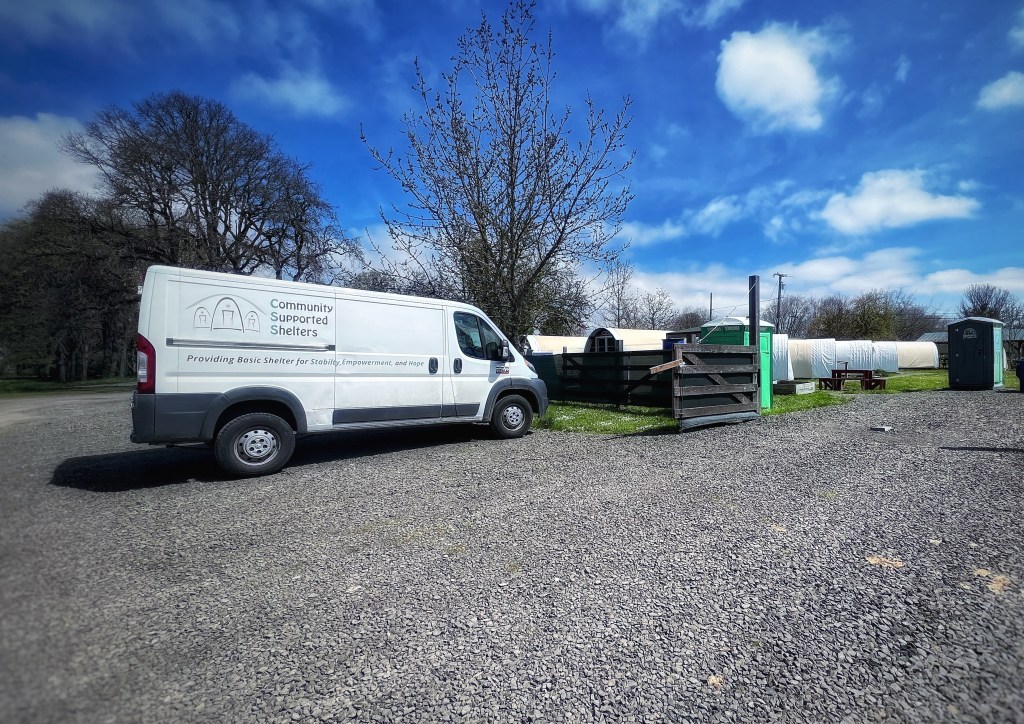
Shared Spaces
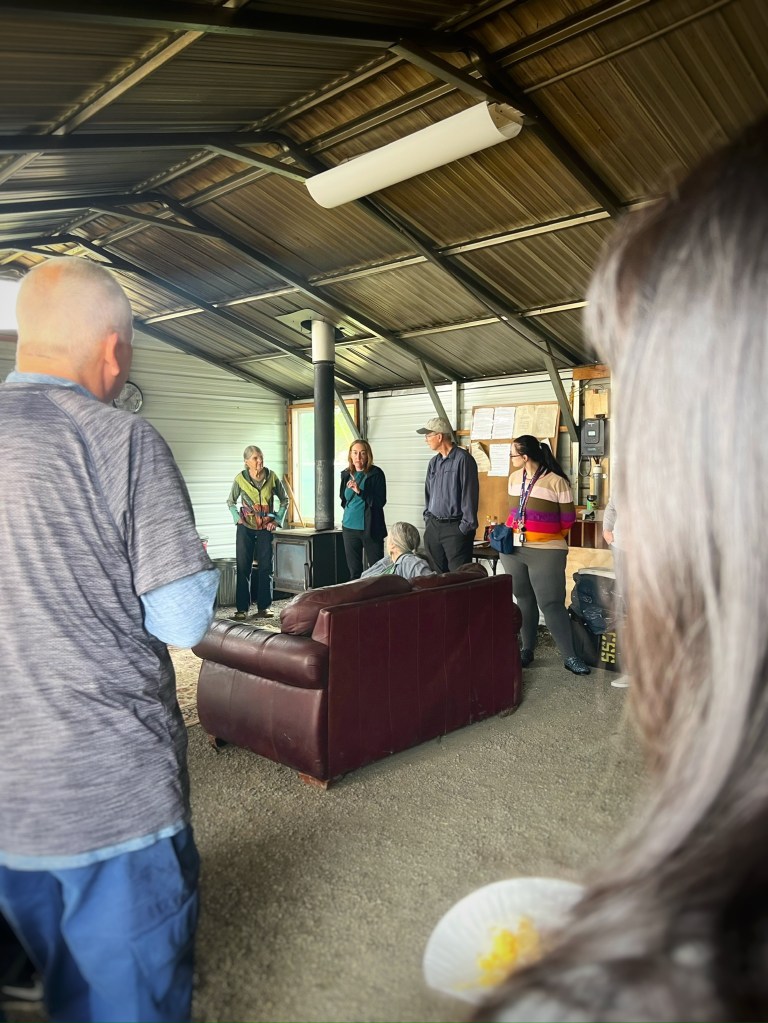
CSS Safe Spots include a shared kitchen and living space with wood heat and propane cooking surfaces. With these and other creative design elements, CSS hones its specialty in leveraging otherwise unused or undeveloped land with their off grid solar and water conservation strategies.
Did you know CSS trucks in clean drinking water and pumps out grey water to the majority of their 14 shelter locations in the City of Eugene?!? Conservation efforts include the development of several grey water filtration systems in partnership with the University of Oregon. All-natural filtration systems such as these would eliminate the need to haul dirty water out every week AND provide a reservior of filtered water for the communities’ gardens. Everyone wins!
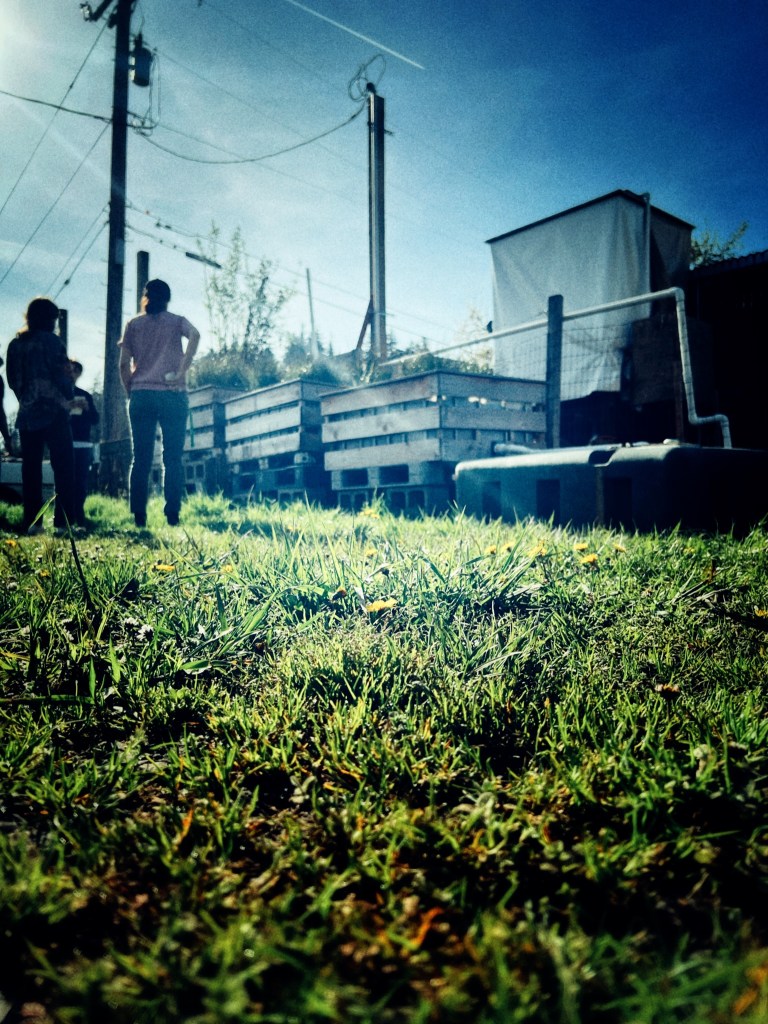
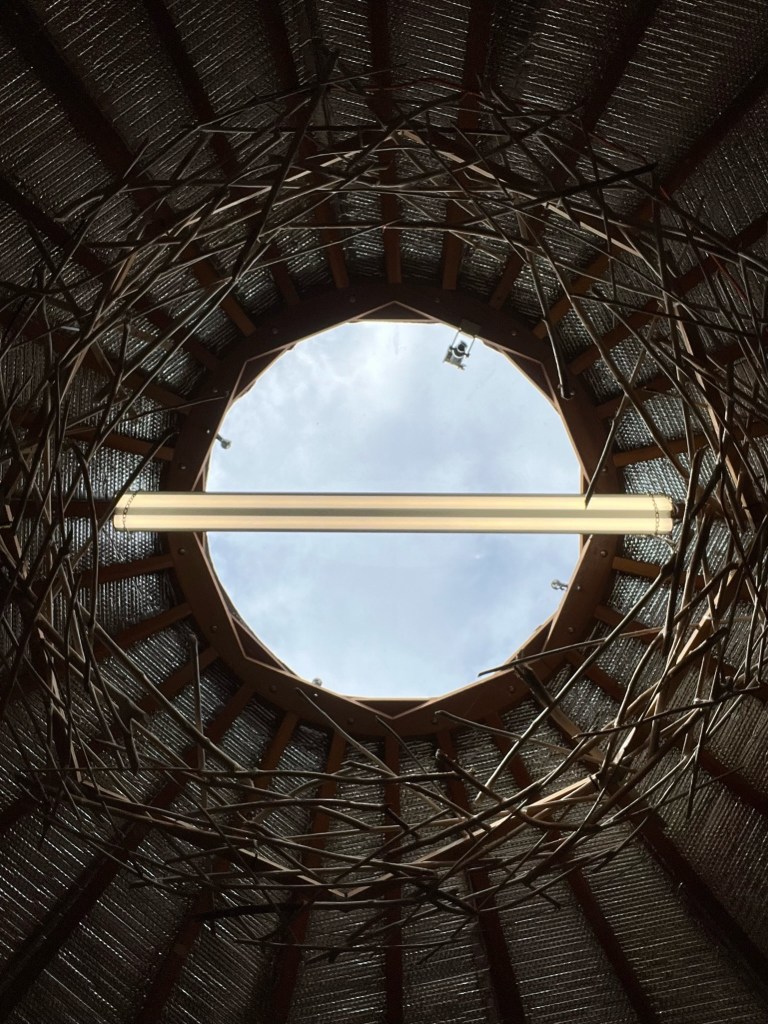
CSS off-grid villages leverage solar solutions (battery bank pictured below) for community room lights and a place for clients to charge their devices!
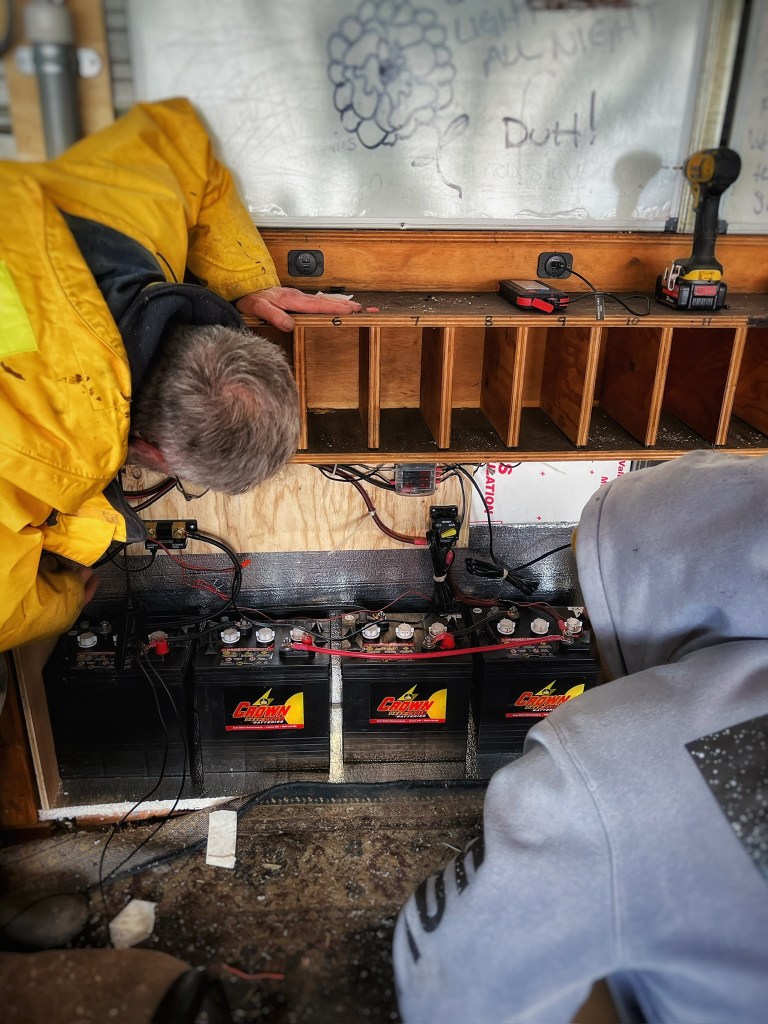
Even as CSS continues to learn more about solar charging stations with the help of knowledgeable volunteers, the hope is to upgrade the infrastructure at a few strategic sites. Upgraded sites will include hook-ups to traditional sewer, water, and electricity! Special thanks to the City of Eugene for providing funding to make these essential, quality-of-life enhancements.
Interiors
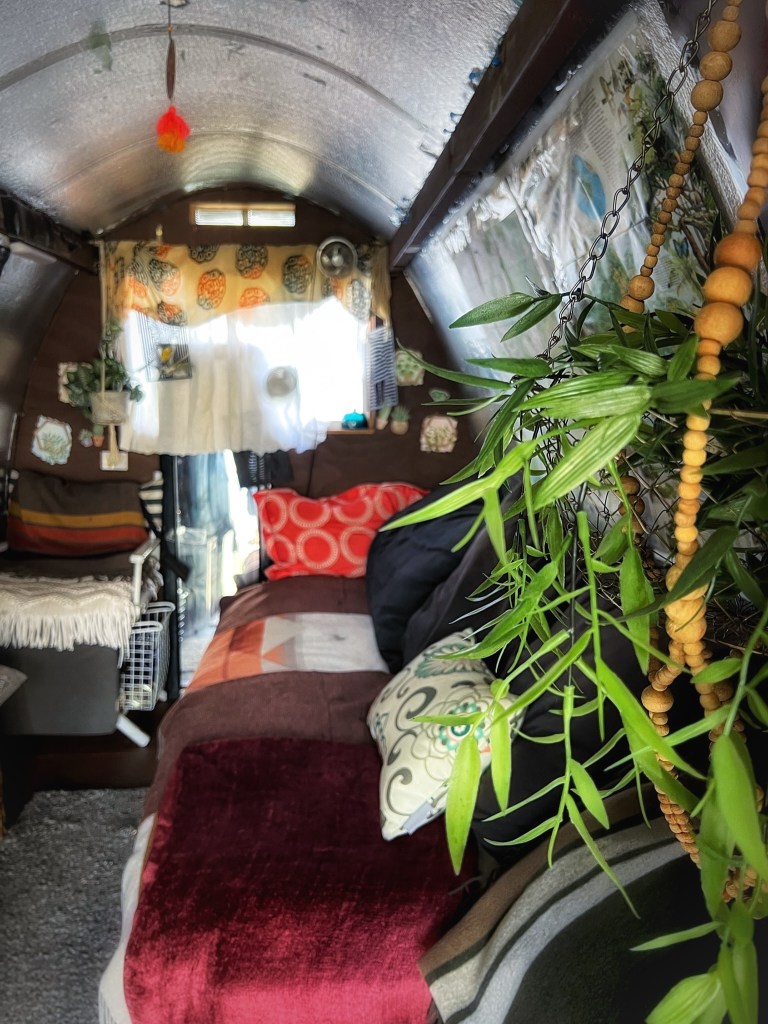
As reassuring as it to simply have a space to secure one’s personal belongings, with only 60 square feet of interior space, storage is always a challenge with a Conestoga hut😉
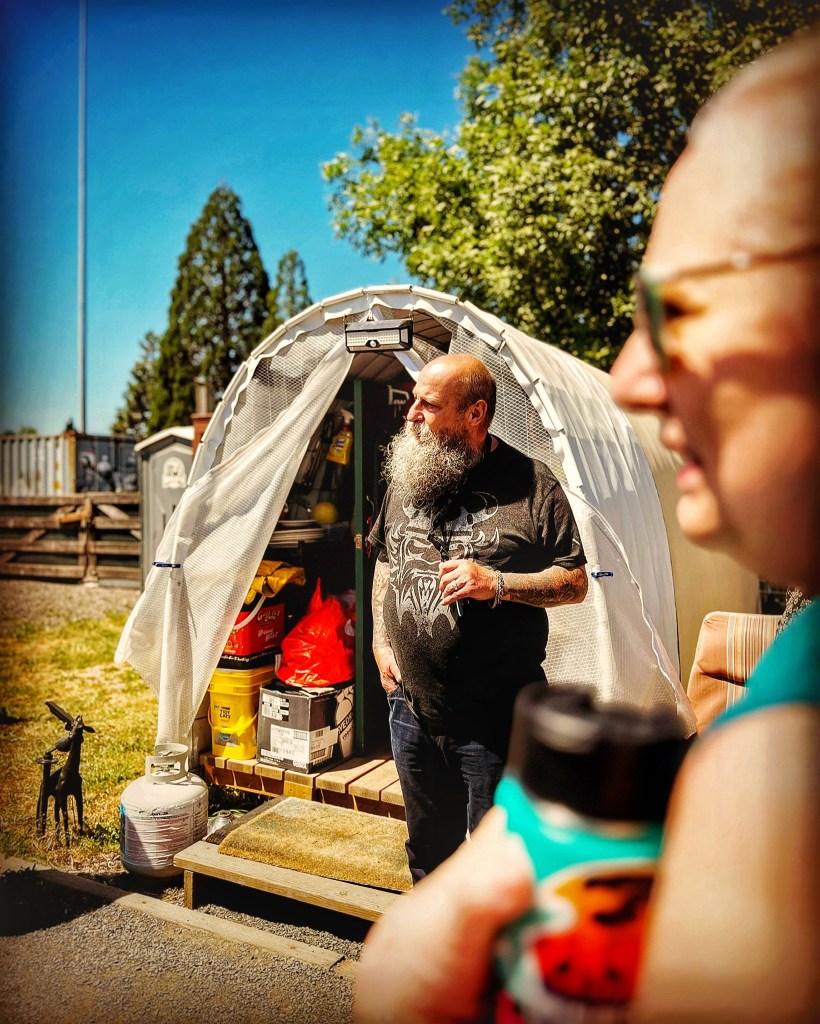
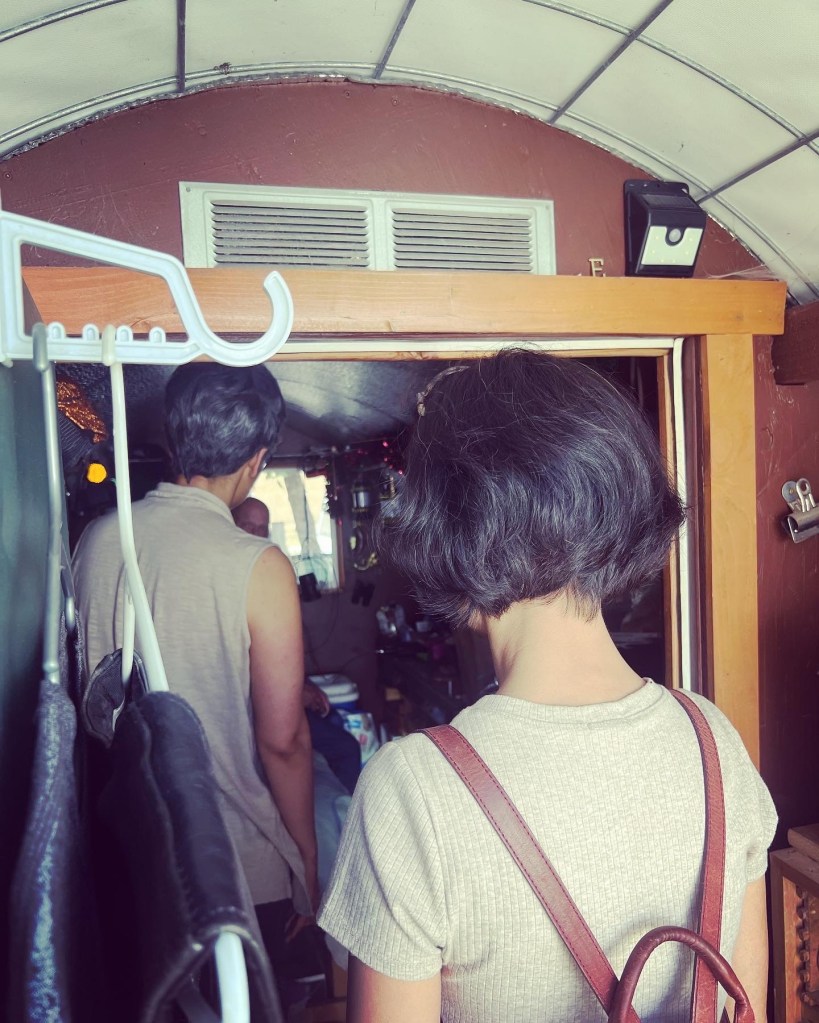
Jack (below), like many residents, got very creative with storage in his small space. Here he is inspiring the professional designers visiting from the University of Oregon School of Interior Design. A ‘Make a Hut a Home’ school project, anyone?!?
Heal
The intent of a CSS Safe Spot is to interrupt the fight-or-flight responses developed to survive life on the streets. These huts can cost less than $10000 a year for essentials and services, and extraordinary savings considering the national average for the cost of a single unhoused person on a community is nearly $35,000 a year! These cost-effective, intentional communities provide for essential needs: shelter, sleep, food, water, restrooms, and human connection. With basic needs met, clients can begin rebuilding their lives.
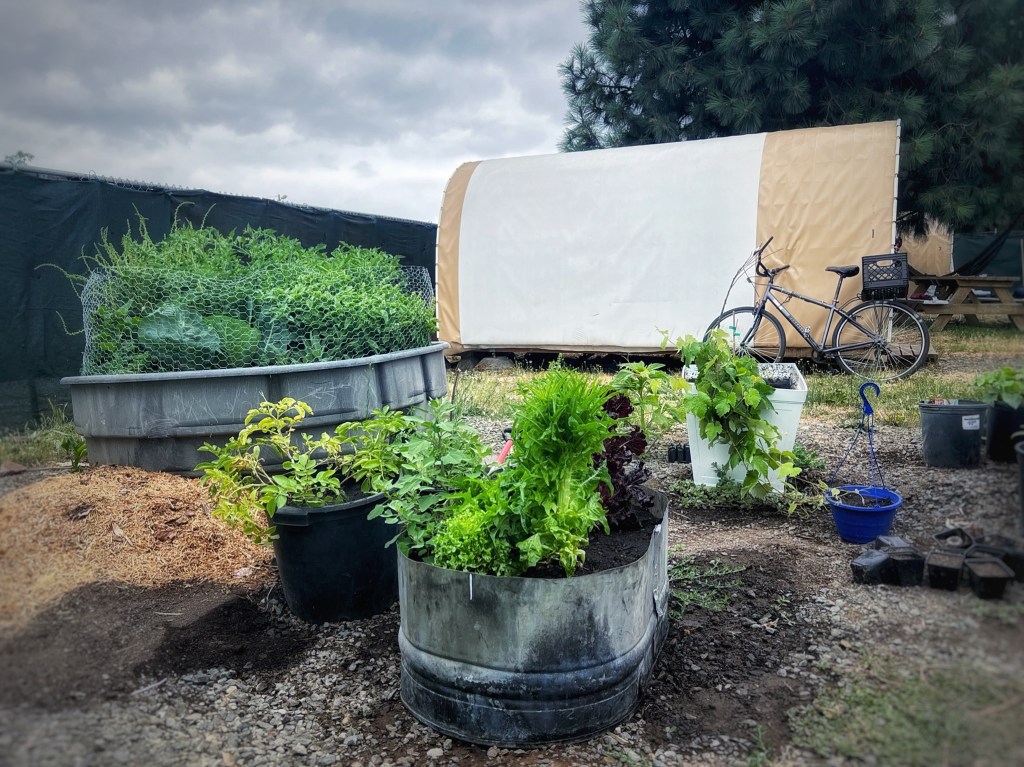
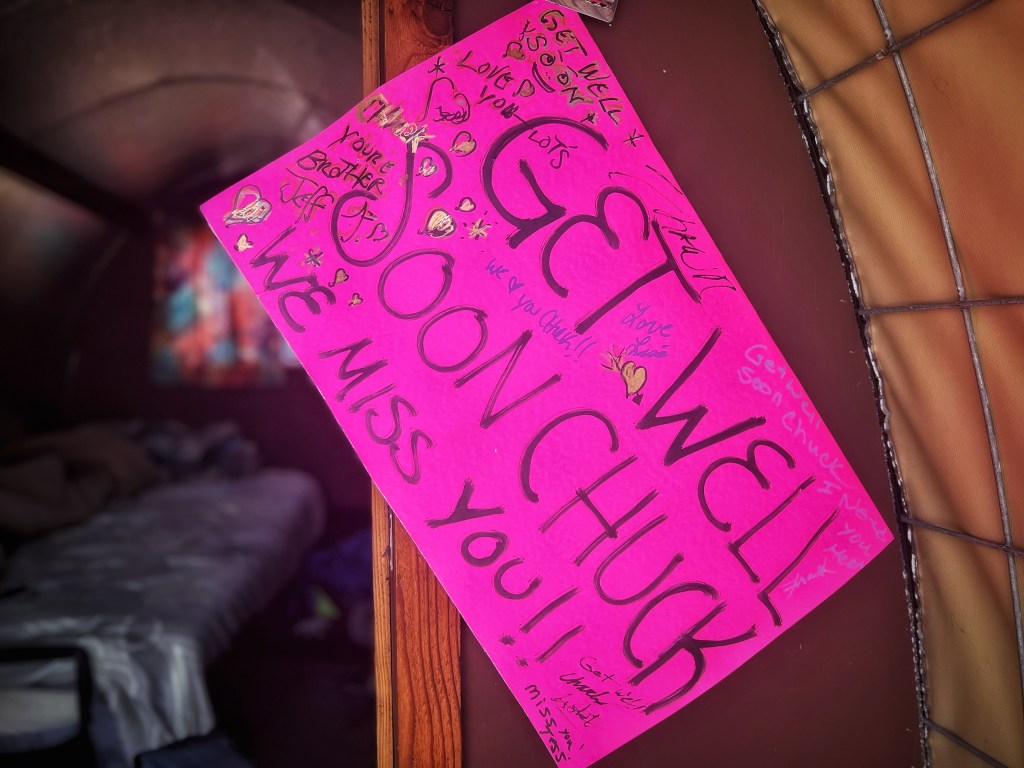
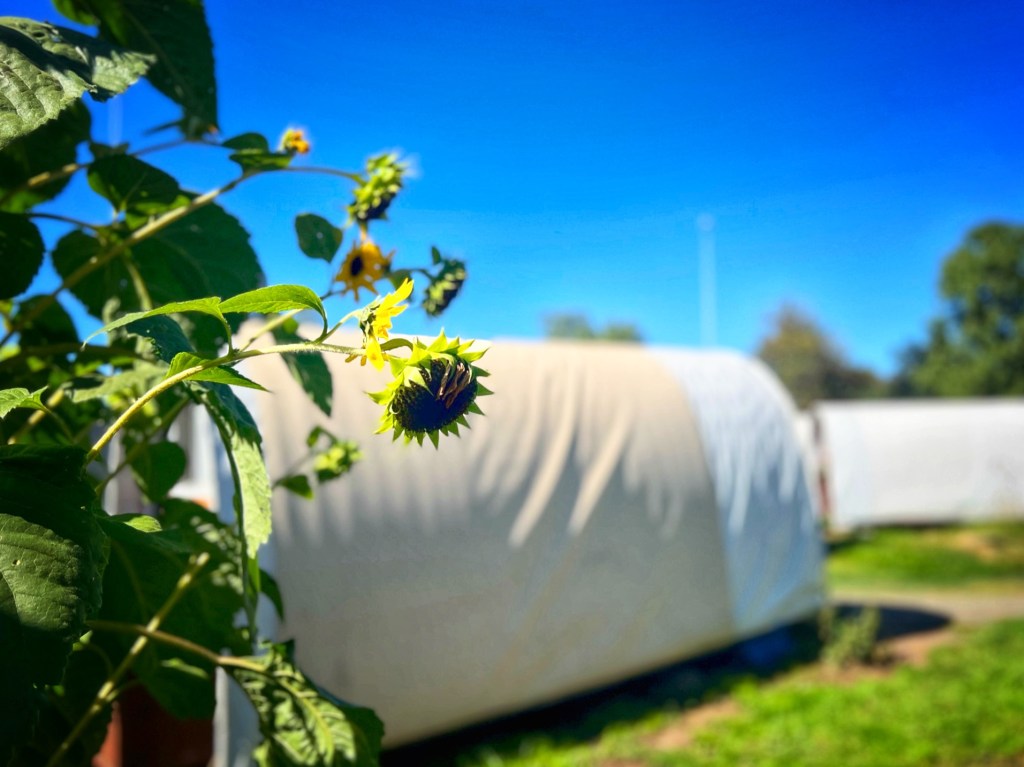
Beyond the effectiveness and resiliency of the Conestoga Huts themselves to provide shelter night after night, the program-focus on community and engagement has given CSS one of the highest success rate of moving individuals from homelessness to positive housing.
ADA Huts
Spring of 2023, Community Supported Shelters’ shop in Eugene was bustling with their latest project. The CSS Maintenance Team and dedicated Hut Volunteers had been working tirelessly on a new ADA hut for one of their most vulnerable clients!
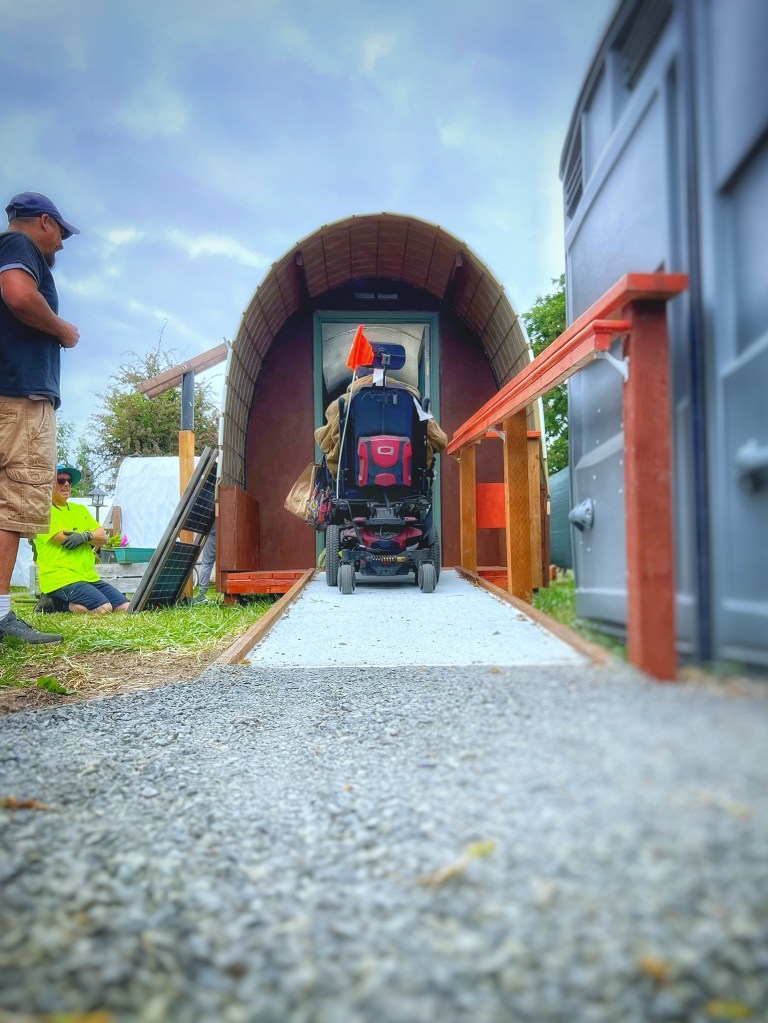
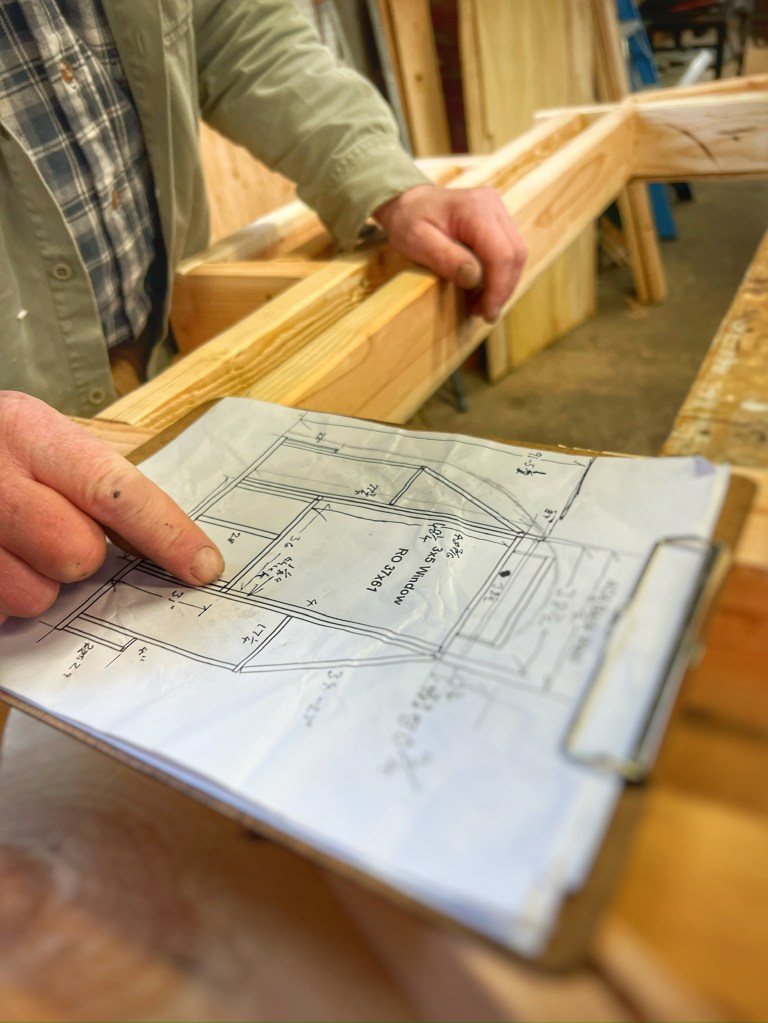
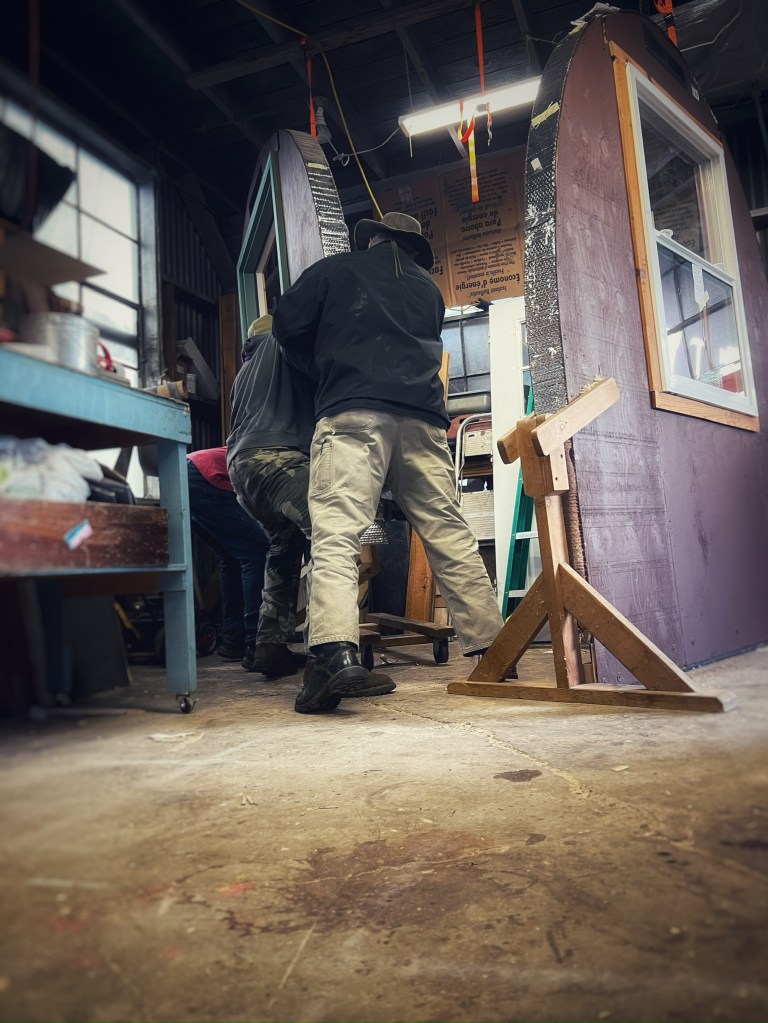
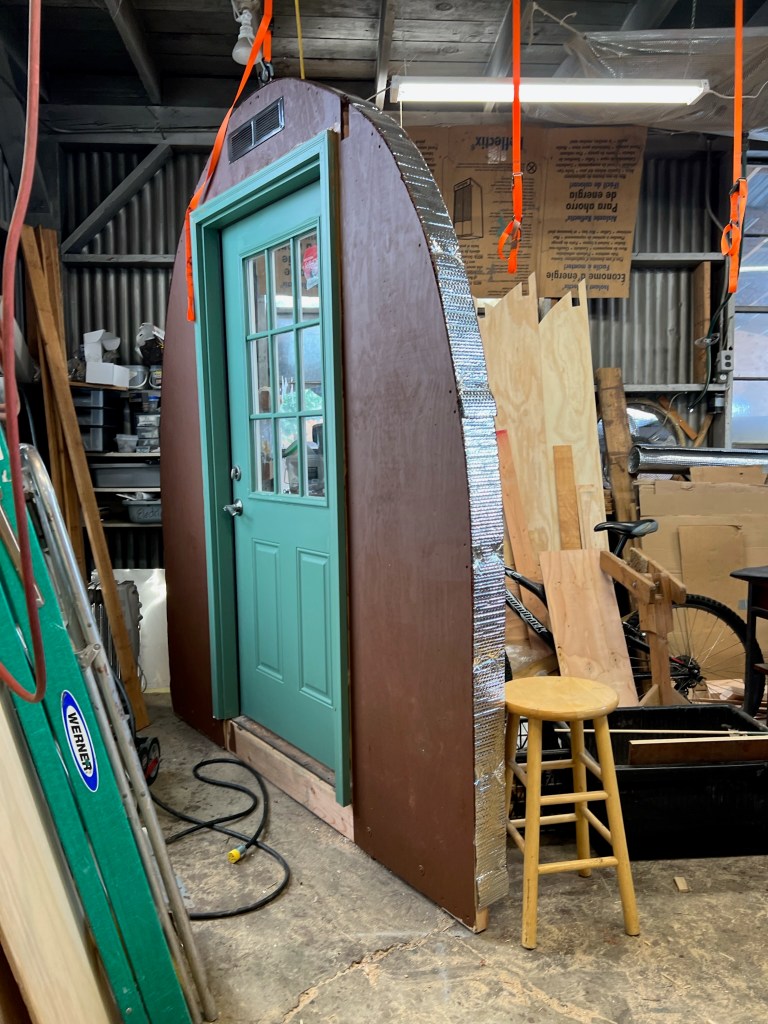

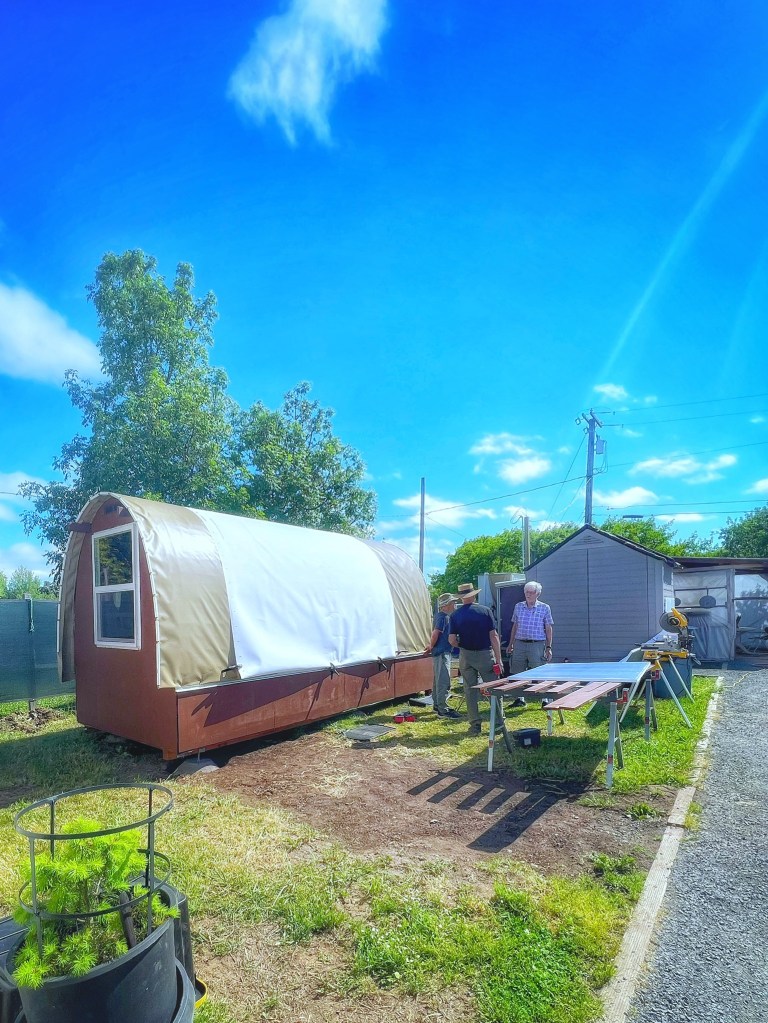
This hut is different from the standard model, with a full-size door and a ramp, making it perfect for our client’s power wheelchair. The installation of solar panels to power a generator and an especially spacious Bucks added to the comfort and convenience of this new shelter.
Partners, Pets & Possessions (The 3 P’s)
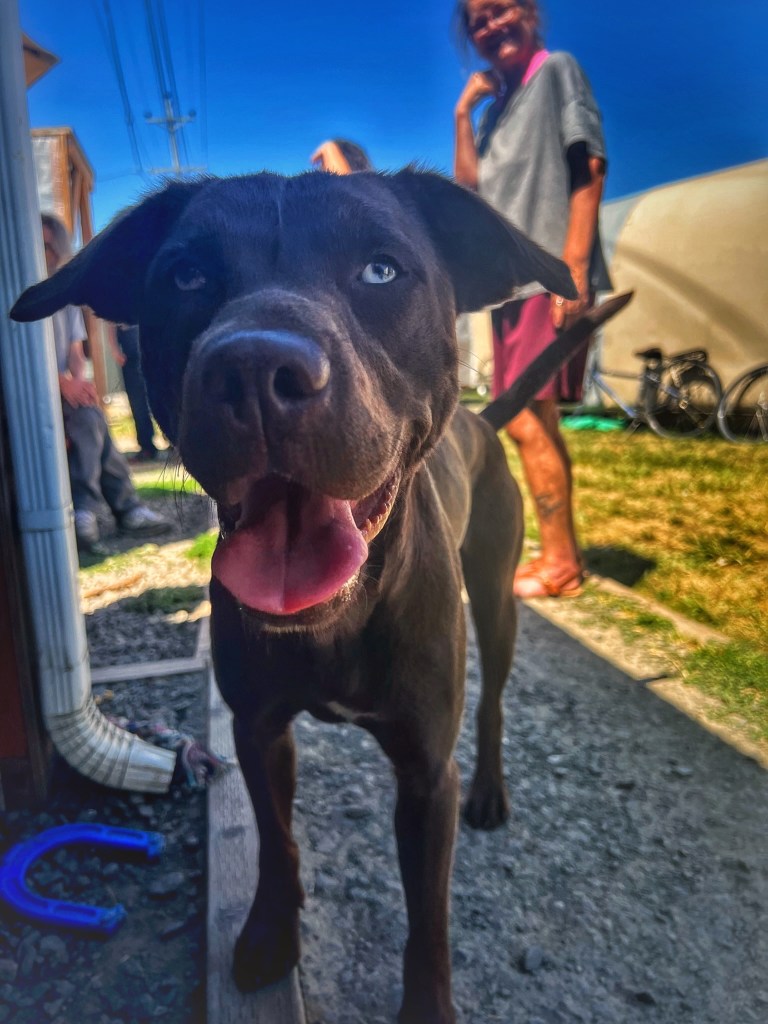
In the world of shelters, the three P’s have always been a struggle…especially in more traditional, communal shelters for the unhoused. The Conestoga Huts and CSS Safe Spot Communities allow clients to have their own space to balance their idividual lives and needs a bit more. Dogs, for instance, are something that can be accommodated in most cases and some CSS Communities even enjoy a shared leash-free agreement within their site.
The Future of Alternative Shelter
CSS leadership sees immediate opportunities for growth tied to their expanded consulting arm. This Team seeks to help other non-profits and communities quickly add shelter beds and jumpstart recovery for the unhoused.
There simply isn’t enough shelter for everyone to even begin their journey.l of wellness!

Here in Lane County, if we filled every single shelter bed right now, 95% of of our documented unhoused would still be without a safe and sanctioned place to sleep! It will take the entire community working together to address the immediate needs of the 95% (bathrooms, trash receptacles, safe storage, etc…) as well as quickly increase the number of shelter beds available in our community.
For CSS, the near future will include a re-invigoration of local faith communities to host Micro-Communities and increasing opportunities for clients to engage with one another and the larger community.
 Tabitha Crystal Eck